Introduction
Accurate species identification relies on high‑quality video, proper lighting, and stable positioning. This guide explains how to place bird cameras so that artificial‑intelligence algorithms can recognize feathered visitors with confidence. Readers will learn foundational concepts, practical placement strategies, product recommendations, and troubleshooting tips that apply to a range of smart bird feeders.
The information presented is based on real‑world user feedback and technical specifications of five leading camera‑enabled feeders. By following the recommendations, one can transform a simple backyard into a reliable wildlife observation station.
Background/Context
Modern bird cameras combine high‑resolution optics, AI bird identification, and wireless connectivity. AI models require clear visual data to differentiate among thousands of species. Factors such as distance, angle, motion blur, and ambient light directly affect algorithmic accuracy.
Most devices operate on 2.4 GHz Wi‑Fi, include solar or battery power, and offer waterproof ratings such as IP65 or IP66. Understanding these technical parameters helps the user select a camera that matches the local climate and power availability.
Camera Placement Strategies
Height and Distance
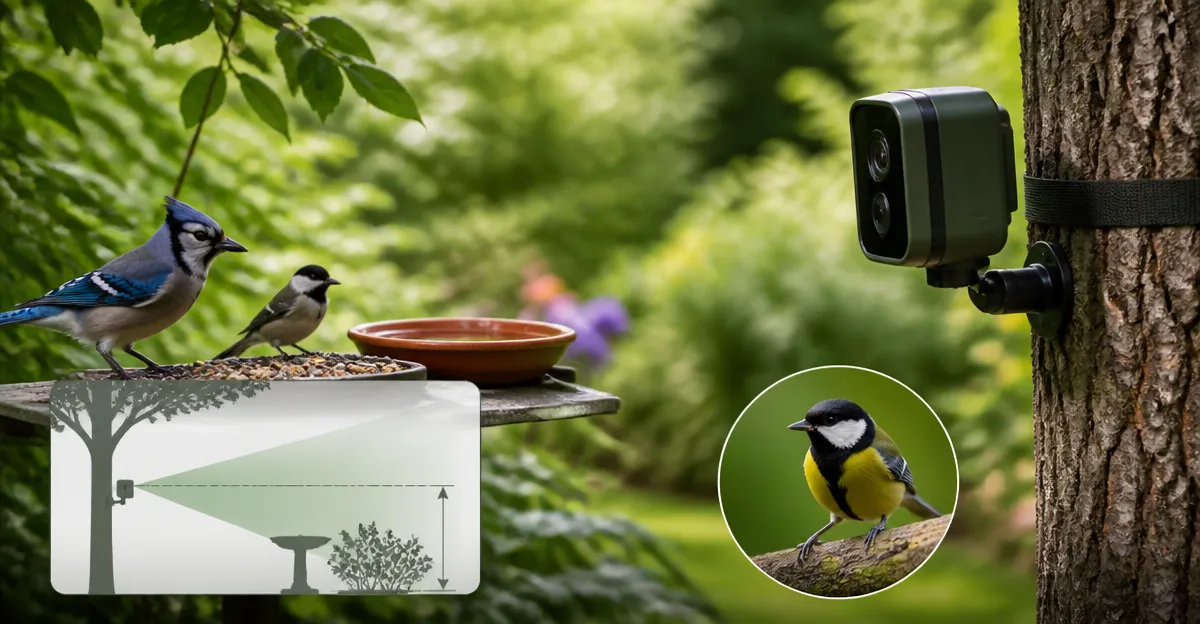
Place the camera at a height that captures the feeding area without obstructing the birds. A level of 3‑5 feet above ground typically provides a clear line of sight while keeping the lens out of reach of larger species. The optimal distance between lens and feeder is approximately 20‑30 cm (8‑12 inches); this range balances field of view with detail needed for AI recognition.
For dual‑lens devices such as the NAVFS Smart Solar Bird Feeder Camera, position the primary feeding lens at the recommended distance and the secondary bath lens about 40‑50 cm away to capture separate activity zones.
Angle and Field of View
A 150° ultra‑wide lens, featured by the Coolfly Smart Bird Camera, allows coverage of an entire feeder platform. However, an overly wide angle can introduce distortion at the edges, reducing AI accuracy. Tilt the camera slightly downward (10‑15°) so that the central portion of the frame contains the feeding surface.
When using a single‑lens model such as the RichBird Smart Bird Camera, align the lens perpendicular to the feeder to avoid skewed images.
Lighting and Night Vision
Daylight provides the best conditions for 2K or 2.5K resolution sensors. Position the feeder in a location that receives indirect sunlight for most of the day; direct midday sun can cause glare, while deep shade reduces color fidelity. For night‑time observation, devices with full‑color night vision, such as the RichBird model, require minimal artificial lighting. Ensure the camera housing is not obstructed by foliage that could cast shadows.
Weather Protection
All featured cameras carry an IP rating indicating resistance to water and dust. The NAVFS model offers IP66 protection, making it suitable for regions with heavy rain or snow. Install the unit on a sturdy mount and verify that drainage holes remain unobstructed to prevent water accumulation.
Power Considerations
Solar panels reduce maintenance but depend on adequate sun exposure. The Fazoxo Smart Bird Feeder Camera includes a 5200 mAh battery paired with a solar panel; place the panel at a 30° angle toward the sun for optimal charging.
Battery‑only models, such as the NETVUE Birdfy Smart Bird Camera, should be positioned where the unit can be easily accessed for periodic recharging.
Comparison/Selection Guide
Choosing the right camera depends on budget, desired features, and environmental conditions. The table below summarizes key specifications.
| Product | Resolution | AI Species Database | Power | Waterproof Rating | Price (USD) | Rating |
|---|---|---|---|---|---|---|
| NAVFS Smart Solar Bird Feeder Camera | 2K HD | 11,000+ species | Solar + 8000 mAh battery | IP66 | 29.99 | 4.3/5 (606) |
| Fazoxo Smart Bird Feeder Camera | Full HD (1080p) | 10,000+ species | Solar + 5200 mAh battery | IP65 | 49.99 | 4.2/5 (1,302) |
| RichBird Smart Bird Camera | 2.5K HD (4 MP) | 10,000+ species | Solar + 4400 mAh battery | IP65 | 89.99 | 4.0/5 (211) |
| Coolfly Smart Bird Camera | 2.5K UHD (1440p) | 10,000+ species | Battery 4400 mAh (optional solar) | IP65 | 74.99 | 3.9/5 (75) |
| NETVUE Birdfy Smart Bird Camera | HD (1080p) | 6,000+ species | Battery only (optional solar) | IP65 | 69.99 | 4.1/5 (178) |
For users seeking the most comprehensive AI database at the lowest price, the NAVFS model offers the best value. Those who prioritize full‑color night vision and a wide field of view may prefer the RichBird or Coolfly units. If a subscription‑free experience is essential, the NETVUE camera provides AI identification without ongoing fees.
Best Practices & Tips
- Secure the mount firmly to a tree or pole to avoid vibration that can blur frames.
- Clean the lens regularly; dust or water droplets reduce image clarity and AI confidence.
- Enable motion‑sensitive recording only during daylight hours to conserve battery life.
- Test the Wi‑Fi signal strength at the installation site; 2.4 GHz networks provide better range for outdoor devices.
- Use the companion app to adjust detection sensitivity; too many false alerts can overwhelm the user.
- Consider adding a simple reflector or white backdrop behind the feeder to improve contrast.
FAQ
- What distance should the camera be from the feeder for accurate AI identification? Approximately 20‑30 cm (8‑12 inches) provides enough detail for most algorithms while maintaining a wide field of view.
- Can I use a solar‑powered camera in a heavily shaded yard? Solar panels require several hours of direct sunlight per day; in heavily shaded areas a battery‑only model or an external solar panel placed in a sunnier spot is recommended.
- Do I need a 5 GHz network for these cameras? All featured products operate on 2.4 GHz Wi‑Fi; a 5 GHz network will not improve connectivity and may prevent the device from connecting.
- How many users can view the live stream simultaneously? Most cameras allow at least two concurrent viewers; the RichBird model supports up to five users without a subscription.
- Is a subscription required for AI bird identification? Only the Fazoxo and some cloud‑storage plans require a paid subscription after the trial period. NAVFS, RichBird, Coolfly, and NETVUE provide free AI identification.
- What waterproof rating is sufficient for winter use? An IP65 rating protects against rain and dust, while IP66 offers additional protection against powerful water jets and heavy snow.
- Can I use the camera for security purposes? Yes; several users report using the RichBird camera to monitor yard activity beyond birds, but be aware that privacy laws may apply.
Conclusion
Proper placement of a bird camera maximizes the quality of visual data, enabling AI algorithms to identify species with high confidence. By considering height, distance, angle, lighting, and power source, one can create a reliable observation station that works year‑round. The products reviewed each excel in different areas, allowing the user to match features to personal priorities such as budget, night‑vision capability, or subscription‑free AI.
Implementing the best‑practice checklist ensures minimal maintenance, consistent performance, and an enjoyable birdwatching experience for the whole family.
Products Featured in This Guide
NAVFS Smart Solar Bird Feeder Camera
Price: $29.99 | Rating: 4.3/5 (606 reviews)
Featured for its dual‑lens design, 2K HD resolution, extensive 11,000‑species AI database, and IP66 waterproof rating, making it ideal for comprehensive backyard observation.
Fazoxo Smart Bird Feeder Camera
Price: $49.99 | Rating: 4.2/5 (1,302 reviews)
Featured for its user‑friendly app, 160° field of view, and optional subscription‑free local storage via microSD, appealing to users who prefer flexibility.
RichBird Smart Bird Camera
Price: $89.99 | Rating: 4.0/5 (211 reviews)
Featured for its 2.5K HD video, full‑color night vision, and 4 MP ultra‑wide lens, providing exceptional detail for night‑time identification.
Coolfly Smart Bird Camera
Price: $74.99 | Rating: 3.9/5 (75 reviews)
Featured for its compact design, 2.5K UHD resolution, and free AI identification without a subscription, suitable for users with limited space.
NETVUE Birdfy Smart Bird Camera
Price: $69.99 | Rating: 4.1/5 (178 reviews)
Featured for its adjustable brackets, 8× magnification, and community‑driven birdwatching platform, ideal for enthusiasts who enjoy sharing observations.
Frequently Asked Questions
What is the optimal distance between a bird feeder camera and the feeding area?
Place the camera 1‑2 feet away to capture clear details without distortion, ensuring the entire feeder fits within the frame.
Which camera angle yields the highest AI identification accuracy?
A slightly elevated, straight‑on angle (30‑45° from horizontal) reduces glare and keeps birds in focus as they approach.
How does ambient lighting affect AI bird identification?
Consistent, diffused lighting—ideally early morning or late afternoon—minimizes shadows and motion blur, improving model confidence.
What Wi‑Fi and power specifications should I check before installing a smart bird feeder?
Ensure the feeder supports 2.4 GHz Wi‑Fi and choose a model with either solar panels or a rechargeable battery rated for IP65/IP66 outdoor use.
What are common troubleshooting steps for blurry or missed bird detections?
Clean the lens, verify proper mounting distance, adjust the angle to reduce glare, and confirm stable Wi‑Fi signal strength.