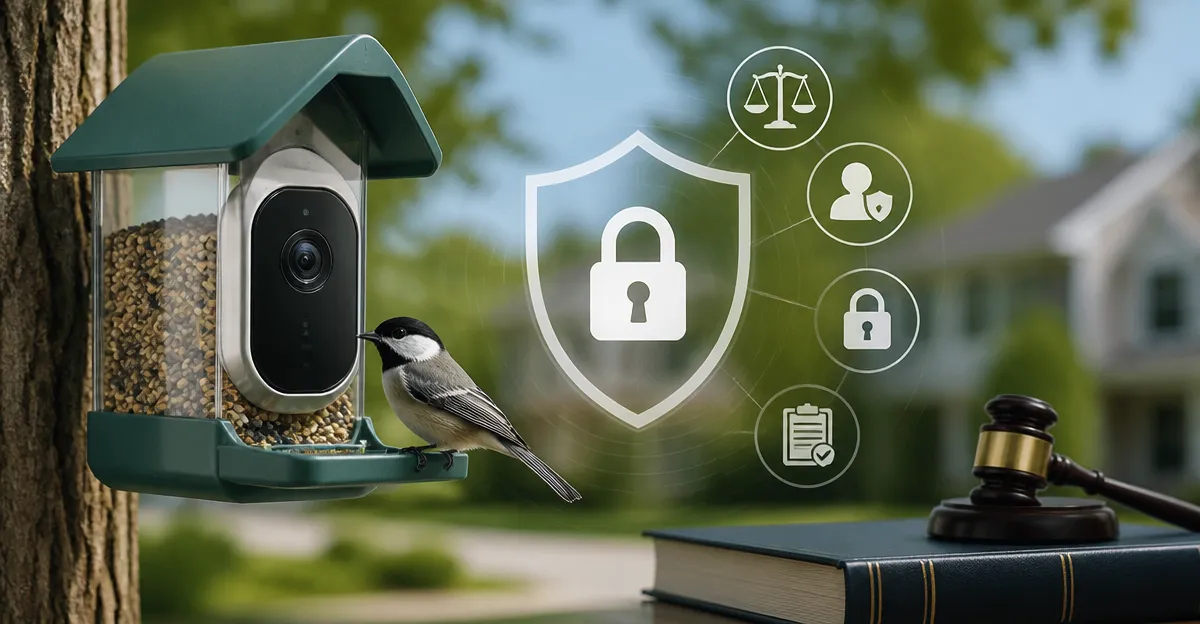
Ultimate Guide to Bird Feeder Camera Privacy & Legal Rules: What Homeowners Need to Know
Introduction
Homeowners are increasingly installing smart bird feeder cameras to enjoy wildlife while staying connected to their property. This guide explains the privacy and legal landscape that surrounds outdoor surveillance devices, offering clear guidance on compliance and best practices. Readers will learn about federal and state regulations, data security obligations, and how to select a camera that respects both birds and neighbors. By the end of the article, one will be equipped to enjoy birdwatching without risking legal repercussions.
Background & Context
Smart bird feeder cameras combine a feeding station with a high‑definition video sensor, Wi‑Fi connectivity, and AI‑driven species identification. They have become popular because they provide real‑time 2K or 4K video streams, instant alerts, and cloud‑based storage. However, any device that records video in a public or semi‑public space may intersect with privacy statutes such as the Video Privacy Protection Act, state wiretap laws, and homeowners’ association rules. Understanding the distinction between private property (where recording is generally permissible) and public view (where consent may be required) is essential for lawful use.
Understanding Privacy Laws for Home Surveillance
In the United States, privacy law for video surveillance is primarily governed by a patchwork of federal statutes and state‑specific statutes. The federal Video Privacy Protection Act focuses on the misuse of video recordings for commercial purposes, while state statutes often address audio recording, expectation of privacy, and consent requirements. Most states follow a “reasonable expectation of privacy” test: if a person would reasonably expect privacy in a location, recording that area without consent may be illegal.
Outdoor bird feeder cameras typically face two legal questions: (1) does the camera capture areas beyond the property line, and (2) does it record audio? Many jurisdictions prohibit audio capture without explicit consent, even if video is permissible. Therefore, homeowners should disable audio features unless they are certain that the recorded area is wholly private.
Homeowners’ associations (HOAs) may also impose additional restrictions. Some HOAs forbid any external cameras that could be viewed by neighbors, while others require approval before installation. Checking community guidelines before mounting a device can prevent costly removal orders.
Finally, the General Data Protection Regulation (GDPR) does not apply directly in the United States, but if a homeowner shares footage internationally (e.g., on a public YouTube channel), they may inadvertently trigger GDPR obligations for EU viewers. Keeping sharing limited to private circles mitigates this risk.
Legal Considerations for Outdoor Cameras
When installing a bird feeder camera, the first step is to conduct a line‑of‑sight assessment. Ensure that the camera’s field of view does not extend onto sidewalks, streets, or neighboring yards. If the camera includes a 132° or 160° wide‑angle lens, consider using physical barriers or adjusting the mount angle to keep the view within the property boundary.
Many states require signage if a camera records audio in a location where people may have a reasonable expectation of privacy. For example, California’s two‑party consent law mandates that all parties be informed before audio is captured. Disabling the microphone on devices such as the HEAPETS Smart Bird Feeder eliminates this concern.
Retention policies are another legal aspect. Storing video for an indefinite period may be considered excessive under privacy principles. Most manufacturers provide cloud storage with automatic deletion after a set period (e.g., 30 days). Homeowners should configure the shortest reasonable retention window.
Finally, be aware of local nuisance laws. A camera that produces bright LEDs visible from the street could be deemed a light pollution issue. Selecting a solar‑powered model with adjustable brightness, such as the Kiwibit 4K Smart Bird Feeder, helps comply with such regulations.
Data Security and Storage Practices
Smart cameras transmit data over Wi‑Fi, which introduces cybersecurity considerations. Use a dedicated 2.4 GHz network for the feeder, separate from the main household network, to limit exposure. Strong, unique passwords for both the Wi‑Fi and the device’s app account are essential.
Many products offer both cloud and local storage options. Cloud storage provides convenience but may involve third‑party data processing. For privacy‑focused users, local microSD storage (up to 512 GB) is a safer alternative. The NAVFS Solar Bird Feeder Camera supports both cloud and local storage, allowing owners to choose the most secure method.
Encryption at rest and in transit is a critical feature. Verify that the manufacturer uses TLS/SSL for app communication and encrypts stored video files. The NETVUE Bird Feeder Camera advertises end‑to‑end encryption, which aligns with best‑practice standards.
Regular firmware updates patch known vulnerabilities. Subscribe to manufacturer notifications and apply updates promptly. Devices that lack a clear update policy should be avoided.
Integrating Bird Feeder Cameras Responsibly
When the legal and security foundations are in place, homeowners can focus on the birdwatching experience. AI‑driven species identification adds educational value but often requires a subscription after a free trial. The Fazoxo Bird Feeder Camera includes a one‑month AI trial and offers local storage to avoid recurring fees.
Solar power reduces the need for frequent battery changes, aligning with environmental stewardship. Both the HEAPETS Smart Bird Feeder and the Kiwibit 4K Smart Bird Feeder feature built‑in solar panels that keep the device operational year‑round.
Family sharing features enhance the communal aspect of birdwatching. Several models allow multiple users to view live streams simultaneously, such as the HEAPETS feeder which supports two concurrent live viewers, and the Kiwibit feeder which supports up to three live viewers and 20 shared accounts for recorded clips.
Finally, consider the physical placement to protect the device from tampering or wildlife damage. Mounting on a pole at a height of 5‑6 feet deters squirrels and reduces the likelihood of vandalism, a recommendation echoed by the NETVUE Bird Feeder Camera user community.
Comparison & Selection Guide
| Feature | HEAPETS Smart Bird Feeder | NAVFS Solar Bird Feeder | Fazoxo Bird Feeder | Kiwibit 4K Smart Bird Feeder | NETVUE Bird Feeder |
|---|---|---|---|---|---|
| Resolution | 2K HD | 2K HD Dual‑Lens | FHD (1080p) | 4K HDR | 2K |
| Solar Power | Yes (built‑in panel, optional wired) | Yes (3W panel + 8000 mAh battery) | Yes (5200 mAh + panel) | Yes (3W adjustable panel + 5200 mAh) | Yes (high‑efficiency panel + 5200 mAh) |
| AI Species ID | 10,000+ (1‑month free trial) | 11,000+ (included) | 10,000+ (1‑month trial) | 10,000+ (30‑day premium trial) | ≈11,000 (subscription required) |
| Live View Users | 2 simultaneous | 2 simultaneous | Multiple (no hard limit) | 3 simultaneous + 20 shared recordings | Unlimited within app |
| Storage Options | Cloud (free 1‑day) + microSD | Cloud + microSD | Cloud (trial) + microSD up to 128 GB | MicroSD up to 512 GB + cloud | Cloud + microSD |
| Price (USD) | $59.98 | $29.99 | $49.99 | $149.99 | $129.99 |
| Rating | 4.3/5 (1,253 reviews) | 4.3/5 (661 reviews) | 4.3/5 (1,344 reviews) | 4.5/5 (504 reviews) | 4.4/5 (1,497 reviews) |
| Weatherproof Rating | IP66 (rain, snow, heat) | IP66 | Weather‑resistant | IP65 | Weather‑resistant, UV‑proof |
The table above helps homeowners match budget, resolution, and feature preferences with legal‑compliant devices. For those on a tight budget, the NAVFS model offers dual‑lens coverage at $29.99 while still providing solar power and AI identification. Premium users who desire 4K HDR and extensive sharing capabilities may prefer the Kiwibit feeder despite its higher price.
Best Practices & Tips
- Conduct a field‑of‑view audit: adjust the camera angle to exclude sidewalks, streets, or neighbor properties.
- Disable audio recording unless you have explicit consent from anyone who might be captured.
- Use a dedicated 2.4 GHz Wi‑Fi network with a strong password to isolate the device from other smart home traffic.
- Enable encryption settings in the app and prefer local microSD storage for sensitive footage.
- Schedule automatic deletion of recordings after 30 days to minimize data retention risks.
- Place the feeder at least five feet above ground to deter squirrels and reduce the chance of vandalism.
- Check local HOA rules and municipal ordinances before mounting; obtain written permission if required.
- Regularly update firmware and review privacy policy changes from the manufacturer.
Frequently Asked Questions
- 1. Do I need a permit to install a solar‑powered bird feeder camera?
- No federal permit is required, but some municipalities may have zoning rules for exterior fixtures. Verify with local authorities if you live in a historic district.
- 2. Can I record audio with my bird feeder camera?
- Audio recording is optional on most devices. If you enable it, you must comply with state consent laws; disabling audio is the safest approach.
- 3. How long can the solar panel keep the feeder powered in winter?
- Solar‑powered models typically include a high‑capacity battery (5,200‑8,000 mAh). In low‑light conditions, the battery can sustain operation for several days, but occasional manual charging may be needed.
- 4. Is it legal to share my bird footage on social media?
- Sharing is permissible if the video does not include private individuals or areas where there is a reasonable expectation of privacy. Blur any accidental by‑standers before posting.
- 5. What should I do if a neighbor complains about my camera?
- First, confirm the camera’s field of view does not capture their property. Offer to adjust the angle or add a physical shield. Document the conversation and keep a copy of the camera’s specifications to demonstrate compliance.
- 6. Do these cameras work with smart home assistants like Alexa?
- Yes, the NETVUE Bird Feeder Camera explicitly supports Alexa integration, allowing voice‑activated live view on compatible devices.
Conclusion
Smart bird feeder cameras provide an enchanting window into nature while introducing complex privacy and legal considerations. By understanding federal and state regulations, securing data transmission, and selecting a device that aligns with legal requirements, homeowners can enjoy uninterrupted birdwatching without infringing on neighborly rights. The products highlighted in this guide each balance performance, affordability, and compliance, empowering users to make an informed choice. Adhering to the best‑practice checklist ensures a safe, lawful, and delightful bird‑watching experience for years to come.
Products Featured in This Guide
HEAPETS Smart Bird Feeder
Price: $59.98 | Rating: 4.3/5 (1,253 reviews)
Featured for its affordable 2K HD video, solar power option, and two‑user live sharing, making it a solid entry‑level choice that complies with most privacy regulations.
NAVFS Solar Bird Feeder
Price: $29.99 | Rating: 4.3/5 (661 reviews)
Highlighted for its dual‑lens 2K HD system, generous solar battery, and flexible storage options, offering excellent value for families seeking comprehensive birdwatching.
Fazoxo Bird Feeder
Price: $49.99 | Rating: 4.3/5 (1,344 reviews)
Chosen for its user‑friendly app, 160° field of view, and optional microSD storage, suitable for users who prefer a subscription‑free AI trial.
Kiwibit 4K Smart Bird Feeder
Price: $149.99 | Rating: 4.5/5 (504 reviews)
Featured for its premium 4K HDR livestream, robust solar system, and extensive family sharing capabilities, ideal for enthusiasts demanding top‑tier image quality.
NETVUE Bird Feeder
Price: $129.99 | Rating: 4.4/5 (1,497 reviews)
Highlighted for its industry‑leading AI accuracy, long‑lasting battery, and Alexa compatibility, making it a reliable choice for tech‑savvy bird lovers.