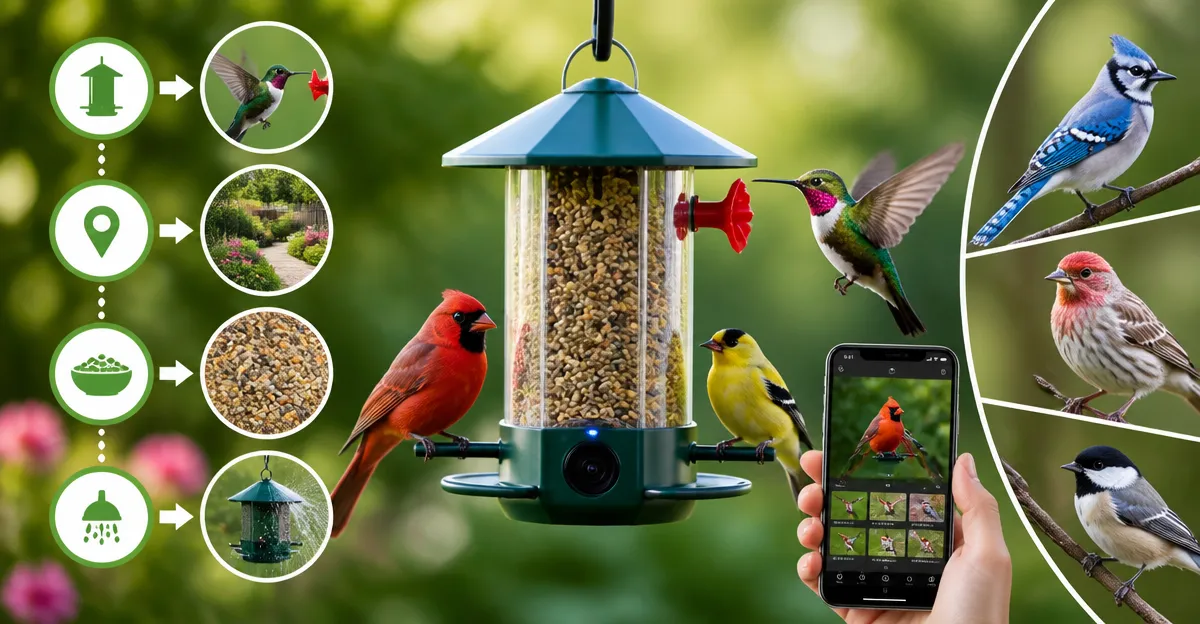
How to Attract Specific Bird Species to Connected Feeders: Proven Tips to Lure Hummingbirds, Cardinals, Finches & More
Introduction
Backyard bird enthusiasts often wonder how to transform a simple garden into a thriving avian sanctuary. This guide explains the essential steps to attract hummingbirds, cardinals, finches, chickadees and other popular species by using the right feeders, positioning, food selections and maintenance practices. By following these proven techniques, readers will experience increased bird activity, richer biodiversity and greater enjoyment of nature from the comfort of their home.
Each recommendation is grounded in real‑world observations and supported by specific products that simplify the process. The guide remains valuable even without purchasing any item, yet the suggested tools provide efficiency, durability and enhanced results.
What You’ll Need
- A squirrel‑proof feeder for larger seed eaters such as cardinals and finches.
- A decorative feeder that encourages multiple birds to gather simultaneously.
- A tube feeder with several feeding ports for small passerines.
- A hanging feeder designed for hummingbirds with ant and bee protection.
- Basic tools: screwdriver, cleaning brush, mild soap.
- Seed varieties: black oil sunflower, nyjer, mixed finch blend, and nectar solution.
The specific products referenced later are linked at their first appearance.
Step 1: Select the Correct Feeder for Each Target Species
The first major decision involves matching feeder design to the dietary preferences and size of the birds you wish to attract. Hummingbirds require a nectar feeder with small ports, while cardinals thrive on large seed platforms that are difficult for squirrels to access.
For squirrel‑proof seed feeding, the Niser Squirrel Proof Bird Feeder offers a metal mesh cage, a 3 lb capacity and a spring‑loaded closure that shuts when a squirrel applies weight. Its 4.3‑star rating from 2,823 reviews indicates reliable durability, and the price of $31.19 makes it a cost‑effective solution for protecting valuable seed.
To provide a decorative, easy‑to‑assemble option that invites a variety of small birds, the Birdream Pagoda Bird Feeder (2‑pack) holds up to 5 lb of seed per unit, features a transparent panel for monitoring, and scores 4.2 stars from 5,162 reviewers. Its retro pagoda design adds visual interest while the wide opening simplifies refilling.
For multiple birds to feed side‑by‑side, the FEED GARDEN Metal Tube Bird Feeder provides six feeding ports, a lift‑up lid for easy filling, and a transparent tube for seed visibility. Priced at $16.98 with a 4.2‑star rating, it is ideal for finches, chickadees and sparrows.
Hummingbirds are best served by the FEED GARDEN Glass Hummingbird Feeder. Its 16 oz leak‑proof glass reservoir, ant moat and bee guards prevent pest intrusion, while the 4 metal flower ports accommodate several birds simultaneously. With a 4.6‑star rating from 6,304 reviews and a price of $16.98, it offers premium performance for a modest cost.
Step 2: Position Feeders for Maximum Visibility and Safety
Placement influences both bird attraction and predator protection. Feeders should be installed where they are easily seen by birds but out of reach of cats, raccoons and squirrels.
Mount the Niser Squirrel Proof Bird Feeder on a sturdy pole at least 10 feet away from dense vegetation. This distance forces squirrels to place their full weight on the feeder, triggering the spring mechanism that closes the openings. The metal construction also resists raccoon knocks, as reported in customer reviews.
Hang the Birdream Pagoda Feeders on ornamental hooks near a sunny spot, allowing the transparent side to catch light and draw birds’ attention. The pagoda’s lightweight design permits relocation if birds favor a different area.
Install the FEED GARDEN Metal Tube Feeder at a height of 4–6 feet, anchored to a branch or pole that can support the weight of multiple birds feeding simultaneously. Ensure the surrounding foliage does not create a bridge for squirrels.
Position the Glass Hummingbird Feeder on a thin, swaying branch or a dedicated hummingbird pole. The 360° perch ring enables the birds to approach from any direction, while the ant moat remains effective even when the feeder moves slightly in the wind.
Step 3: Choose the Appropriate Food and Nectar Recipes
Different species are attracted to specific seed types and nectar concentrations. Understanding these preferences increases visitation rates.
Cardinals prefer large, bright red seeds such as black oil sunflower. Fill the Niser feeder with a bulk supply of sunflower seeds to create a high‑energy source that outcompetes smaller birds.
Finches and chickadees are drawn to small, high‑protein nyjer or mixed finch blends. Load the FEED GARDEN Metal Tube Feeder with nyjer to fill the six ports, ensuring the tiny seeds remain accessible while larger birds are deterred by the small hole size.
The Birdream Pagoda Feeders accept a general seed mix, making them suitable for sparrows, goldfinches and occasional cardinals. Their 5‑lb capacity typically lasts 1–3 days, reducing the need for frequent refills.
Hummingbirds thrive on a 1:4 sugar‑to‑water solution (one part white granulated sugar to four parts water). Boil the mixture, let it cool, and fill the Glass Hummingbird Feeder. The ant moat and bee guards prevent insects from contaminating the nectar, a critical factor for hummingbird health.
Step 4: Implement Squirrel and Predator Deterrents
Even the most robust feeder can be compromised without proper deterrents. Combine physical barriers with strategic placement for optimal protection.
The Niser feeder’s spring‑loaded cage serves as the primary squirrel defense, but additional baffles can be added to the pole if local squirrels are exceptionally agile. Ensure the baffle is positioned 4–6 feet above the ground, forcing squirrels to climb higher than they are comfortable.
For the Metal Tube Feeder, attach a simple PVC pipe baffle above the hanging point. The smooth interior prevents squirrels from gaining traction, while the feeder’s metal ports keep larger birds from displacing seed.
Raccoons are known to knock down feeders, as mentioned in the Niser product reviews. To mitigate this risk, secure the feeder with a sturdy steel cable and use a wide‑base pole that resists tipping.
Hummingbirds face minimal predator threats at the feeder, but keeping the glass reservoir away from reflective surfaces reduces the chance of accidental collisions with glass.
Step 5: Maintain Cleanliness and Monitor Bird Activity
Regular cleaning prevents disease transmission and ensures birds continue to visit. Follow a weekly maintenance schedule that aligns with each feeder’s design.
The Niser feeder’s lower compartment can be removed by releasing a compression pin, allowing thorough washing with mild soap and water. Rinse completely before refilling to avoid soap residue.
The Birdream Pagoda Feeders feature a detachable lid; wipe the interior and dry before reassembly. The transparent panel also makes it easy to spot mold or damp seed.
For the Metal Tube Feeder, lift the lid, empty any remaining seed, and scrub the tube with a bottle brush. The removable parts simplify the process and reduce the likelihood of hidden mold.
The Glass Hummingbird Feeder requires hand washing only; the wide mouth permits a brush to reach all corners. Replace the nectar every 3–4 days in warm weather to prevent fermentation.
Keep a simple observation log noting species, visitation times and any feeder issues. Over time, patterns will emerge, allowing you to adjust placement, food type or feeder height for optimal results.
Tips & Pro Tips
- Install a motion‑activated camera to capture rare visitors and refine your feeding strategy.
- Provide a water source such as a birdbath; birds often congregate near both food and water.
- Rotate seed types seasonally; finches favor nyjer in winter, while cardinals prefer sunflower in fall.
- Use a light‑colored pole for the hummingbird feeder to reduce glare that can deter birds.
- Trim nearby branches that could serve as a bridge for squirrels, as emphasized in the Niser user experience.
Troubleshooting
Problem: Squirrels are still accessing the feeder.
Solution: Verify that the feeder is at least 10 feet from any supporting branch. Add a second baffle or relocate the feeder to an isolated pole.
Problem: Nectar is leaking from the hummingbird feeder.
Solution: Ensure the gasket is seated correctly and that the cap is tightened fully. Replace the gasket if it appears worn.
Problem: Seed becomes moldy quickly.
Solution: Store seed in an airtight container, keep feeders shaded from direct afternoon sun, and clean the feeder weekly.
Conclusion
By selecting species‑specific feeders, positioning them strategically, offering the right foods, and maintaining diligent care, backyard gardeners can create a vibrant ecosystem that welcomes hummingbirds, cardinals, finches, chickadees and many other birds. The tools highlighted in this guide provide reliable performance, durability and ease of use, enabling both novice and experienced birdwatchers to enjoy consistent avian activity throughout the year.
Products Mentioned in This Guide
Frequently Asked Questions
What type of feeder attracts hummingbirds most effectively?
Use a small, bright-colored nectar feeder with red accents and refill it with a 1:4 sugar‑water solution.
Which feeder design deters squirrels while feeding cardinals and finches?
A squirrel‑proof feeder with weight‑activated perches or a baffle prevents larger mammals from accessing the seeds.
How should I position feeders to attract a variety of bird species?
Place feeders near trees or shrubs for cover, 3–5 feet off the ground, and keep them spaced 10–15 feet apart to reduce competition.
What foods are best for attracting chickadees and finches?
Offer black‑oil sunflower seeds, nyjer (thistle) seeds, and small suet pieces in tube or platform feeders.
How often should I clean and maintain my bird feeders?
Clean feeders with hot, soapy water every 2–3 weeks, or weekly during hot weather, to prevent mold and disease.